Zara Schmitt · 6 November 2026
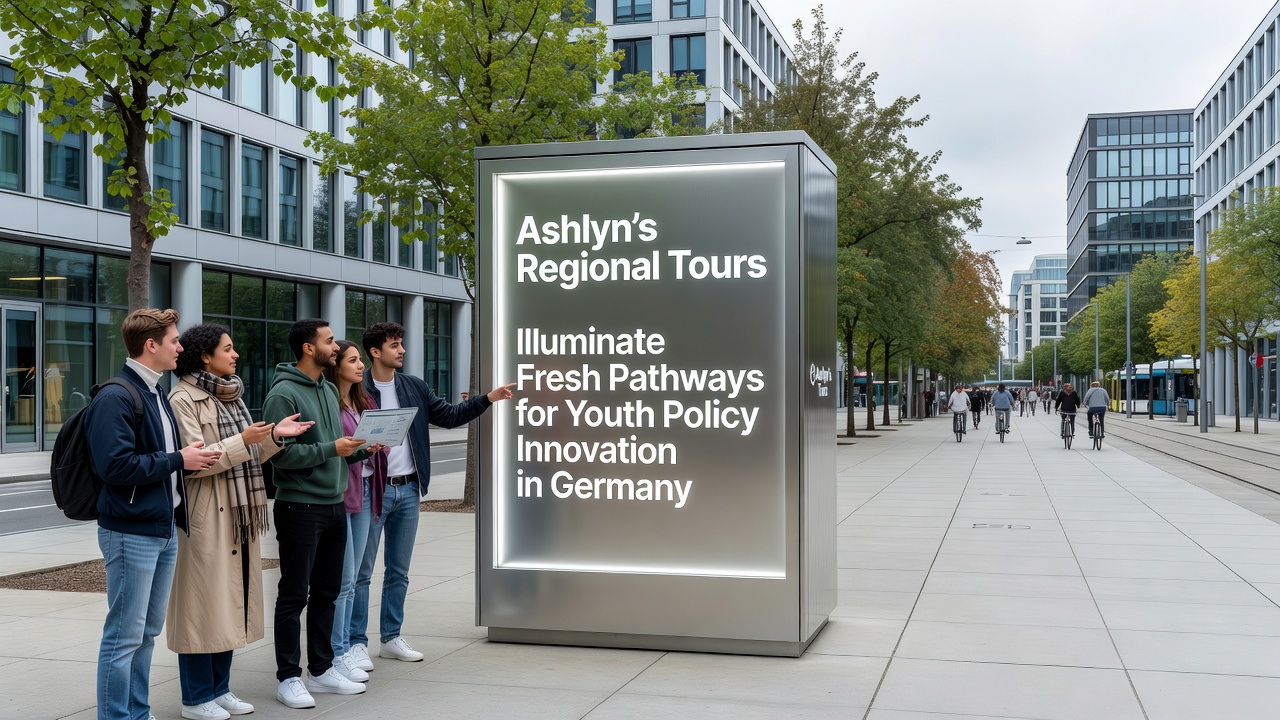
Ashlyn's Regional Tours Illuminate Fresh Pathways for Youth Policy Innovation in Germany
Regional tours led by Ashlyn have gained attention across Germany as mechanisms for advancing youth policy discussions, with events scheduled through November 2026 connecting local communities to broader innovation frameworks. These tours visit cities in multiple states, bringing together participants from educational institutions, local governments, and youth organizations to examine practical approaches to policy development. Data from the German Federal Ministry for Family Affairs, Senior Citizens, Women and Youth shows increased participation in regional youth forums over the past two years, reflecting a pattern of expanded outreach efforts.
Observers note that the tours emphasize collaborative workshops where attendees review case studies from different regions. In one documented session held in Stuttgart, participants analyzed data on education access and mental health services, drawing on reports compiled by regional authorities. The format encourages direct input from young people, which aligns with findings from studies conducted at the University of Mannheim on effective youth engagement strategies. These sessions often extend into follow-up meetings that track how initial ideas translate into local initiatives.
Key Elements of the Tour Structure
The itinerary covers northern, central, and southern Germany, with stops timed to coincide with school terms and community events. Each location features presentations on current policy challenges followed by group exercises designed to generate measurable proposals. Researchers at Humboldt University have tracked similar programs and report that structured regional interactions correlate with higher rates of policy pilot projects launched within twelve months. Ashlyn's approach incorporates digital tools for remote participation, allowing those unable to attend in person to contribute through live streams and shared documents.
Statistics compiled by the European Commission on youth participation indicate that cross-regional exchanges produce diverse perspectives on issues such as vocational training and digital inclusion. Tours integrate these elements by inviting speakers from multiple sectors, including representatives from labor unions and technology firms. This mix creates opportunities for participants to connect policy concepts with real-world applications, as seen in recent gatherings in Hamburg where attendees discussed apprenticeship reforms.
Regional Variations and Participant Outcomes
Events in the east highlight demographic shifts and their impact on education funding, while western stops focus more on urban mobility and environmental policies affecting younger populations. A study released by the Bertelsmann Foundation in 2025 examined comparable tours and found that localized adaptations lead to higher retention of ideas in subsequent policy drafts. Participants frequently form ongoing networks that extend beyond individual events, sharing resources through dedicated online platforms.

Records from the tours indicate steady growth in attendance figures, with November 2026 dates already attracting registrations from over thirty organizations. Coordination with municipal youth councils ensures alignment with existing local priorities, reducing duplication of efforts. Those who have followed the sequence of stops describe a cumulative effect where insights from one city inform discussions in the next, creating a layered understanding of national trends.
Data and Broader Context
Figures released by the OECD on youth policy effectiveness underscore the value of regional input in shaping national strategies. Ashlyn's tours incorporate these benchmarks during debrief sessions, where teams evaluate progress against established indicators. This method draws on established practices observed in Canadian provincial youth councils and Australian state-level forums, adapted to German administrative structures. The result appears in documented policy recommendations submitted to state parliaments following tour cycles.
Additional context comes from academic papers published in the Journal of Youth Studies, which analyze how sustained regional engagement influences long-term civic participation rates. Data collected during Ashlyn events contributes to these datasets by providing granular information on attendance demographics and topic preferences. Such contributions support larger analyses without requiring centralized control over content.
Conclusion
The ongoing series of regional tours continues to generate records of youth policy interactions that span multiple German states through November 2026 and beyond. Documentation from these activities feeds into wider discussions at federal levels, supported by evidence from government agencies and research institutions. Patterns observed so far suggest continued expansion of similar formats as tools for connecting local experiences with innovation pathways.