Zara Schmitt · 20 November 2026
Ashlyn's Workshops Bridge Generational Gaps in German Storytelling Traditions
Roots of German Storytelling Traditions
German storytelling traditions trace back through centuries of oral transmission, printed collections such as the Brothers Grimm volumes from the early 1800s, and regional variations preserved in rural communities across Bavaria, the Black Forest, and the Rhineland. Data compiled by cultural archives show that many of these narratives survived industrial shifts and two world wars yet face erosion as fluent speakers of dialect forms decline in number each decade.
Workshop Structure and Methods
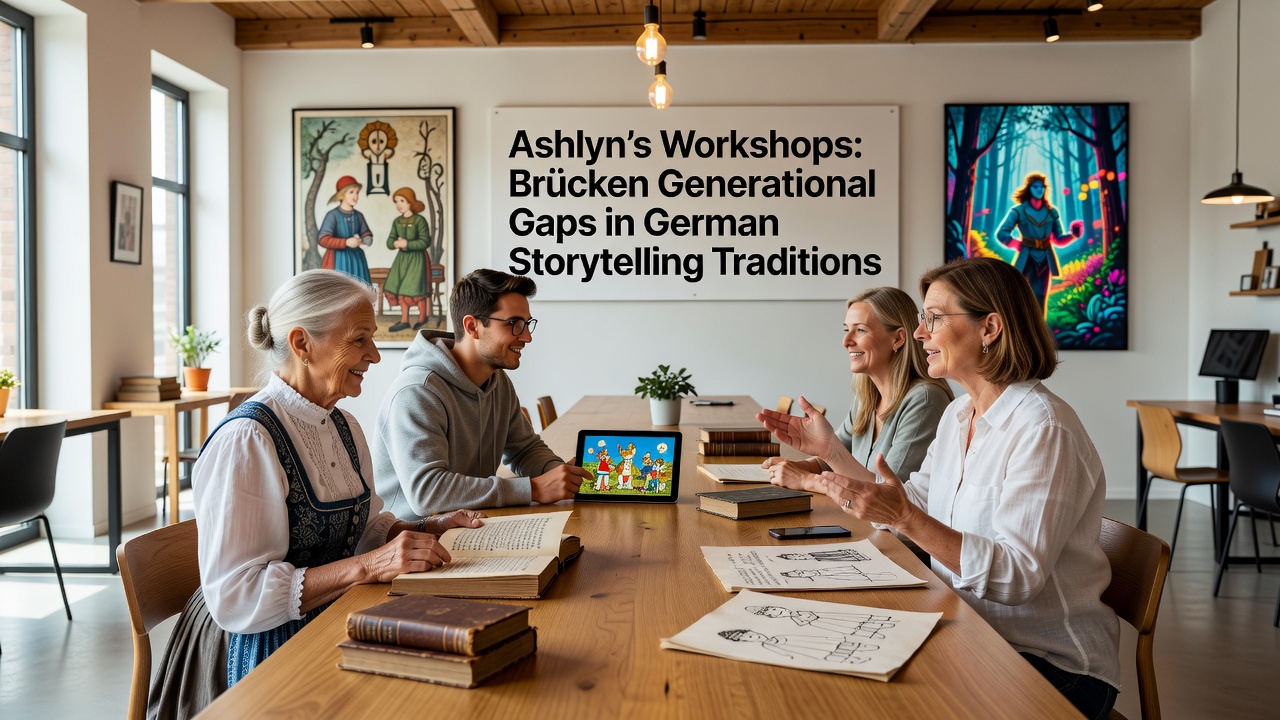
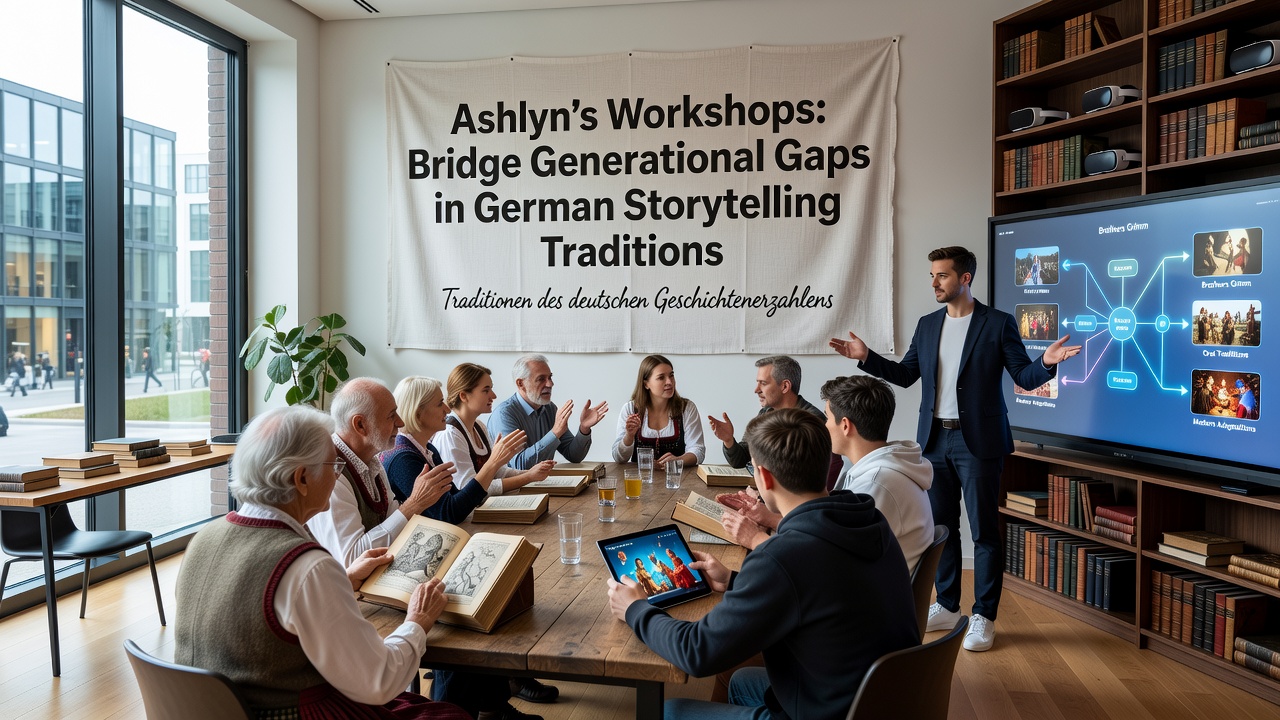
Ashlyn's program pairs experienced narrators aged sixty and above with participants under thirty in structured sessions that last three to five days. Each gathering opens with live retellings of familiar tales followed by exercises that adapt plot structures, character roles, and moral lessons to contemporary settings. Facilitators supply recording equipment so that younger attendees capture both audio and annotated transcripts, creating digital archives that feed into public libraries and school curricula. Sessions in Hamburg last October demonstrated measurable retention rates when follow-up surveys three months later tested recall of original motifs among participants.
One cohort in Leipzig last year produced a bilingual collection that combined High German retellings with Sorbian dialect elements, and the resulting manuscript entered circulation through regional publishers. Observers note that the format encourages direct transmission rather than mediated interpretation, which keeps linguistic nuances intact across age groups.
November 2026 Schedule and Regional Reach
The November 2026 calendar lists events in five cities: Cologne, Dresden, Stuttgart, Frankfurt, and a two-day intensive in rural Mecklenburg-Vorpommern. Each location hosts between forty and sixty attendees, with registration handled through local cultural centers and university folklore departments. Travel stipends cover costs for participants from smaller towns, and data from prior rounds indicate that roughly thirty-five percent of attendees come from outside the host city. Program coordinators coordinate with municipal libraries to host final performances that open to the public, turning the workshops into community events rather than closed seminars.
Documented Outcomes and Participation Figures
Attendance records from 2023 through 2025 list more than twelve hundred individuals across thirty-eight workshops. Follow-up evaluations conducted by partner universities track continued involvement: twenty-eight percent of younger participants joined local storytelling circles within six months, while forty-one percent of older narrators reported teaching additional sessions in schools or community centers. A study released by the University of Tübingen's Institute for Empirical Cultural Studies found that dialect vocabulary retention improved by an average of eighteen percent among participants who completed both the live sessions and the subsequent digital archiving tasks.
Similar patterns appear in reports issued by the German Commission for UNESCO, which tracks intangible cultural heritage projects nationwide. Those figures reveal that workshop outputs, including transcribed recordings and adapted scripts, now appear in more than sixty public collections. Cross-referencing with library loan statistics shows increased circulation of Grimm-related volumes in cities that hosted events, suggesting renewed public interest beyond the immediate participant group.
Integration with Broader Cultural Networks
Workshop organizers maintain formal ties with the Goethe-Institut network and several state-level ministries for culture. These connections supply venues, publicity channels, and occasional co-funding, yet the core curriculum remains independent of any single institutional agenda. External evaluators from the European Folk Network reviewed the 2025 cycle and noted consistent adherence to ethical guidelines for oral history collection, including consent protocols and attribution standards that protect narrators' intellectual contributions.
One documented case involved a participant from a small village near Passau who contributed a previously unrecorded variant of a local water-spirit legend. The story entered the workshop archive, received transcription in both dialect and standard German, and later formed the basis for a short educational film screened at regional film festivals. Such outcomes illustrate how individual contributions scale into wider distribution without altering the original transmission chain.
Conclusion
Current records indicate that Ashlyn's workshops continue to expand their geographic footprint while maintaining a focus on direct, face-to-face exchange between age cohorts. Participation numbers, archival deposits, and follow-up activity rates provide concrete measures of engagement with longstanding German storytelling practices. As the November 2026 dates approach, registration data already point to sustained demand across multiple federal states, and partner institutions report ongoing interest in integrating workshop outputs into educational resources.